What 10,000 Trained Professionals Taught Us About AI Adoption
Ahead of our 2026 Thai-enterprise AI benchmark, four patterns we see in every engagement — and the one gap that predicts whether adoption sticks.
Later this year we will publish The State of AI Adoption in Thai Enterprises — a benchmark report built on measured data rather than vendor surveys: aggregated results from our AI-readiness assessments, capability assessments, and the training programs behind 10,000+ professionals trained and 3,450+ co-built AI assistants.
The survey side of that report is collecting now (more on how to contribute below). But some patterns do not need to wait for the charts — we see them in almost every engagement. Here are the four we would bet on before the data lands.
1. The gap is almost never the tools — it is integration
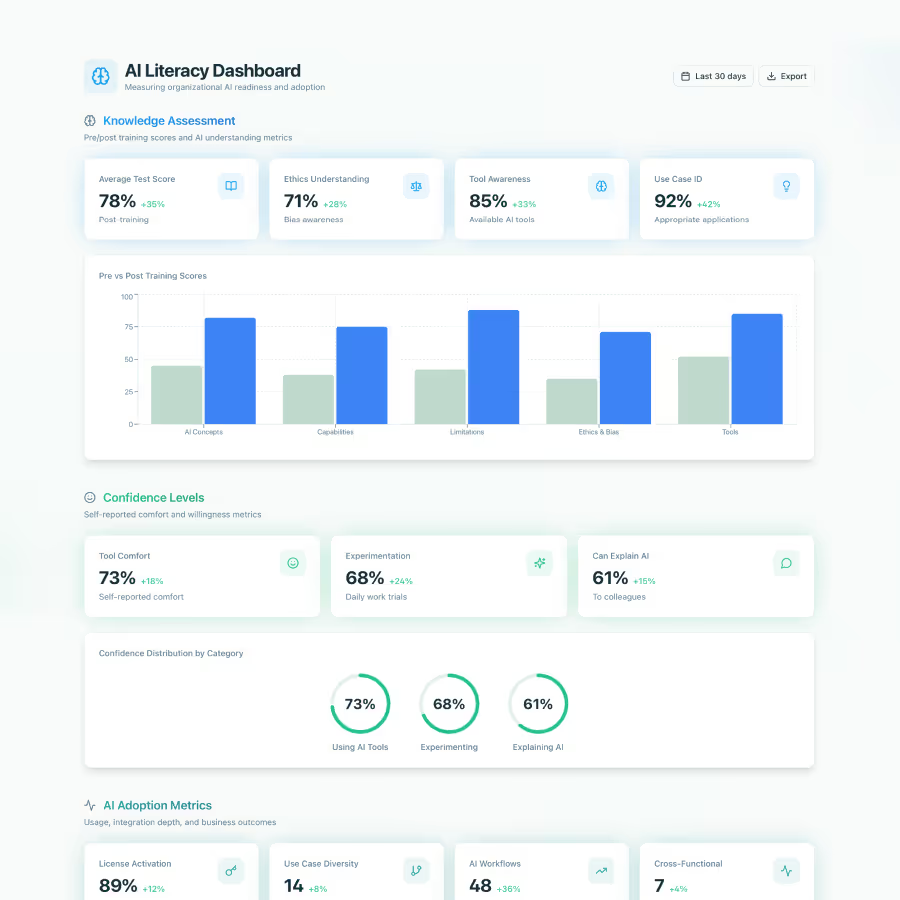
The most common shape we find when we assess an organisation: foundations score high, workflow integration scores low. People understand what AI is and can use it in isolation — but it has not entered the shared, repeatable processes where work actually happens.
In one engagement with a ~400-person professional services firm, the literacy assessment showed exactly this: high foundations, low integration. The fix was not more general training — it was co-building one owned workflow (report drafting).◦1◦By the numbers≈60%drop in average first-draft time over one quarter, after co-building one owned workflow1A composite figure from engagements showing this pattern, and first-draft time specifically — total time to a client-ready deliverable fell by closer to a quarter. Our own program records, not benchmark survey data.RelatedRead the full case study
Individual skill is necessary but not sufficient. Adoption lives or dies at the level of the team process, not the individual prompt.
Keep reading

Case Study: Turning Individual AI Wins Into Shared Capability
A capable, well-trained team where nothing compounded: every AI win stayed private. Five harvested workflows and one co-built assistant later, the median user caught up with the best.
Case Study: Putting a Defensible Number on AI Adoption
An AI programme everyone liked nearly lost its budget because nobody could prove it worked. Two baselined workflows later, it survived the cut — and earned an expansion.